
Last week CenTax held our inaugural residential conference, “Closing the Tax Gap,” at the University of Warwick.
Around 100 delegates joined us across the two days, drawn from HMRC and HM Treasury, major firms and independent advisers, professional bodies, UK and international academics, and think tanks. Our aim was to broaden the debate on tax compliance in the UK by combining policy, administrative, technical, legal and academic perspectives that do not often share a room.
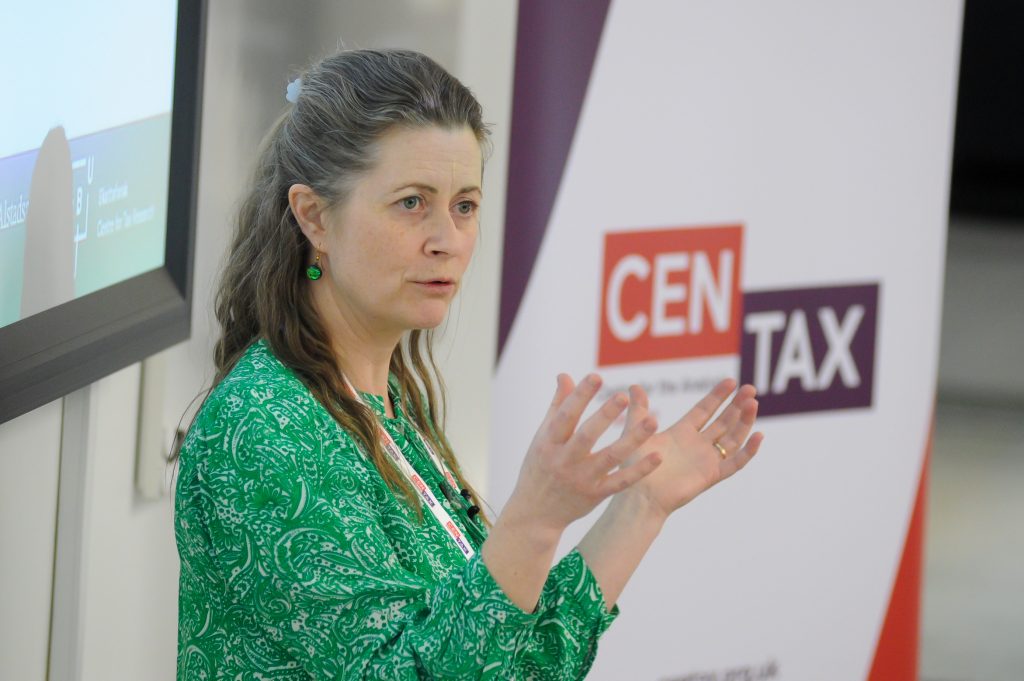
Day 1 focused on understanding and measuring the tax gap, opening with a panel on how the UK measures the tax gap and how its methodology compares internationally. This was followed by a keynote from Professor Annette Alstadsæter, Director of Skatteforsk, on the global picture of offshore wealth and the limits of official estimates.
The afternoon looked at small and micro-businesses, the largest single component of the gap.
The formal business of the day over, delegates gathered in The Slate for a pre-dinner reception sponsored by CIOT and heard a few words from John Barnett, CIOT Vice President (pictured below, in gallery). Dan Neidle of Tax Policy Associates gave the after-dinner address, offering a light-hearted look at tax compliance in the UK, ending with a serious suggestion that HMRC should take a more prominent role in countering misinformation on social media.
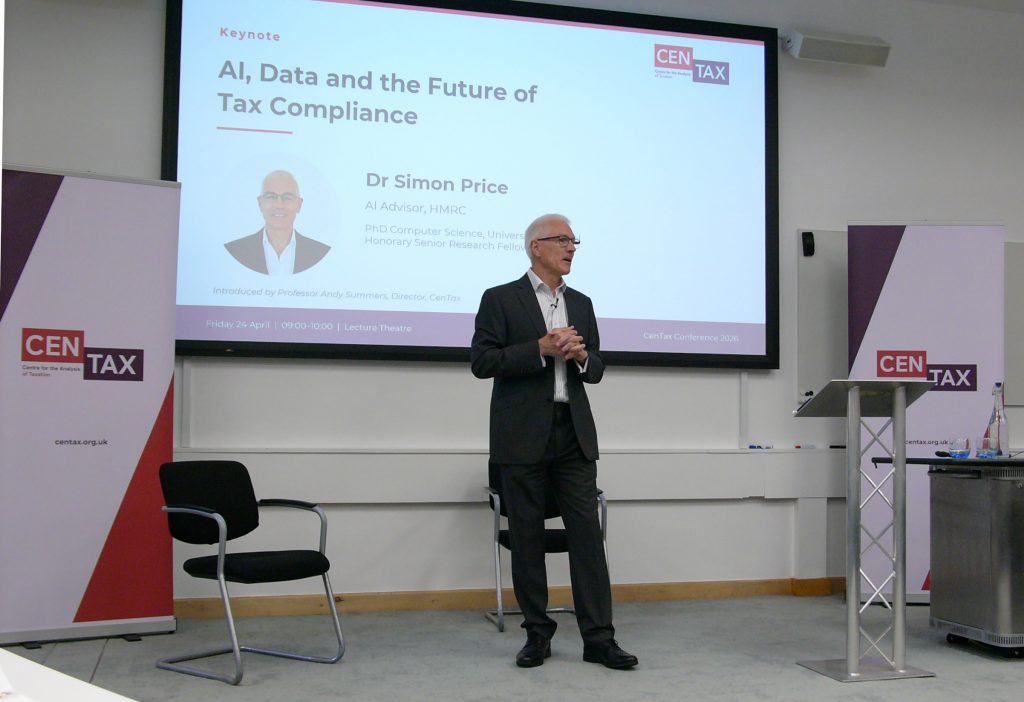
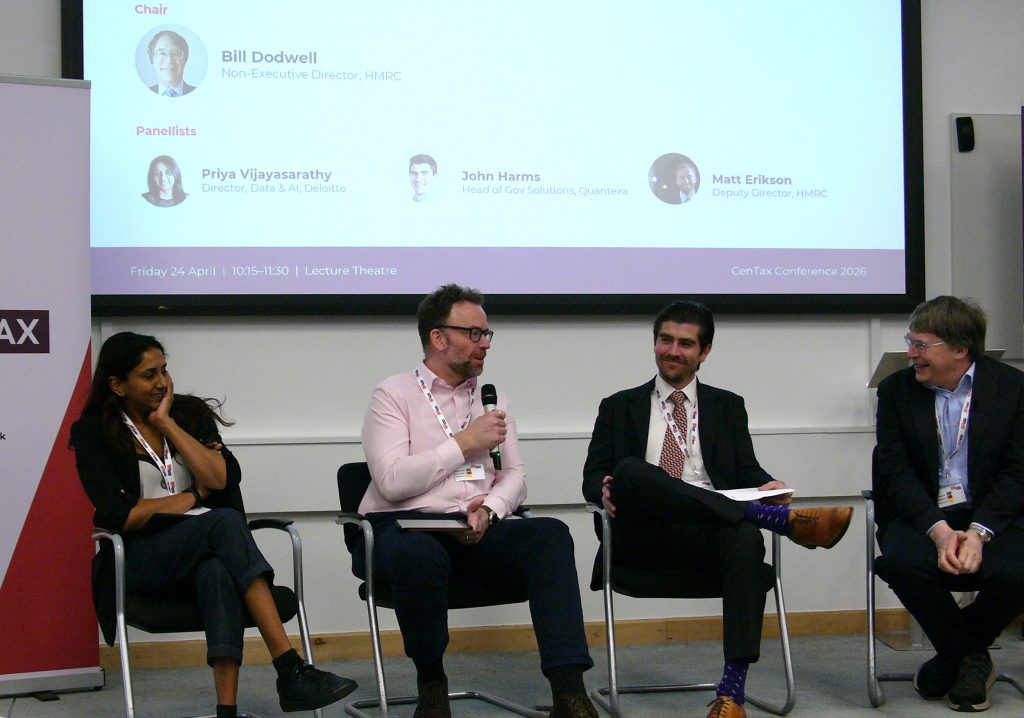
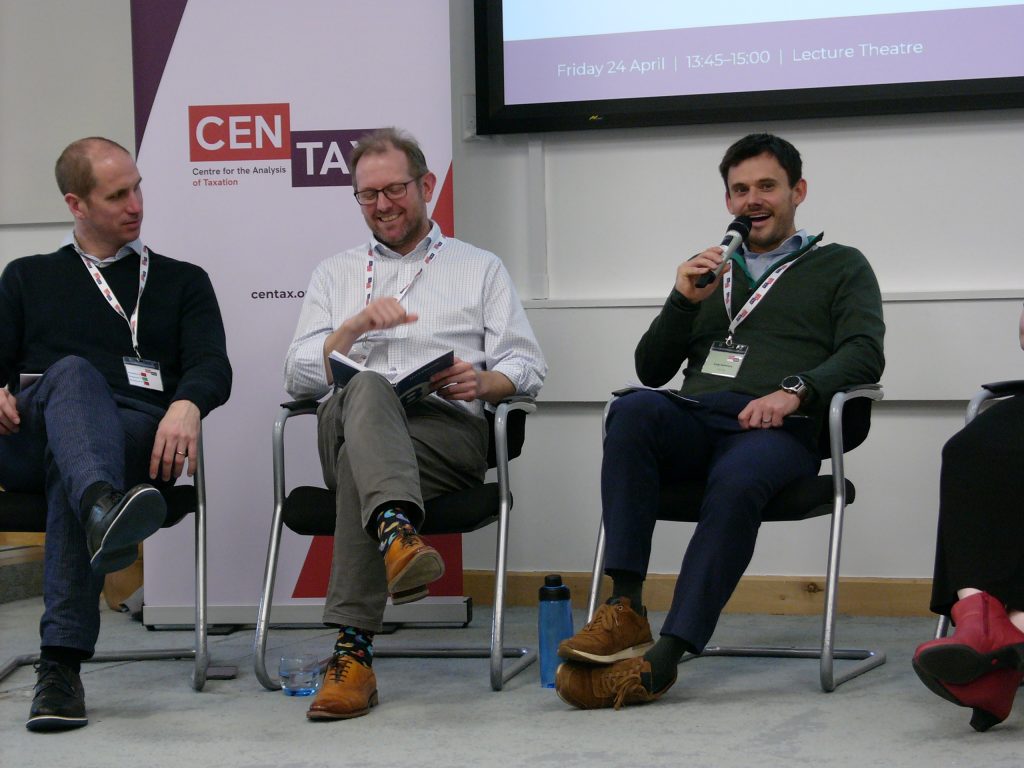
Day 2’s theme was the future of tax compliance and administration, opening with a keynote from Dr Simon Price, AI Advisor to HMRC on AI, data, and HMRC’s Transformation Roadmap, followed by a panel on data and digitalisation.
The closing panel asked how to build a long-term roadmap to close the gap that goes beyond electoral cycles.
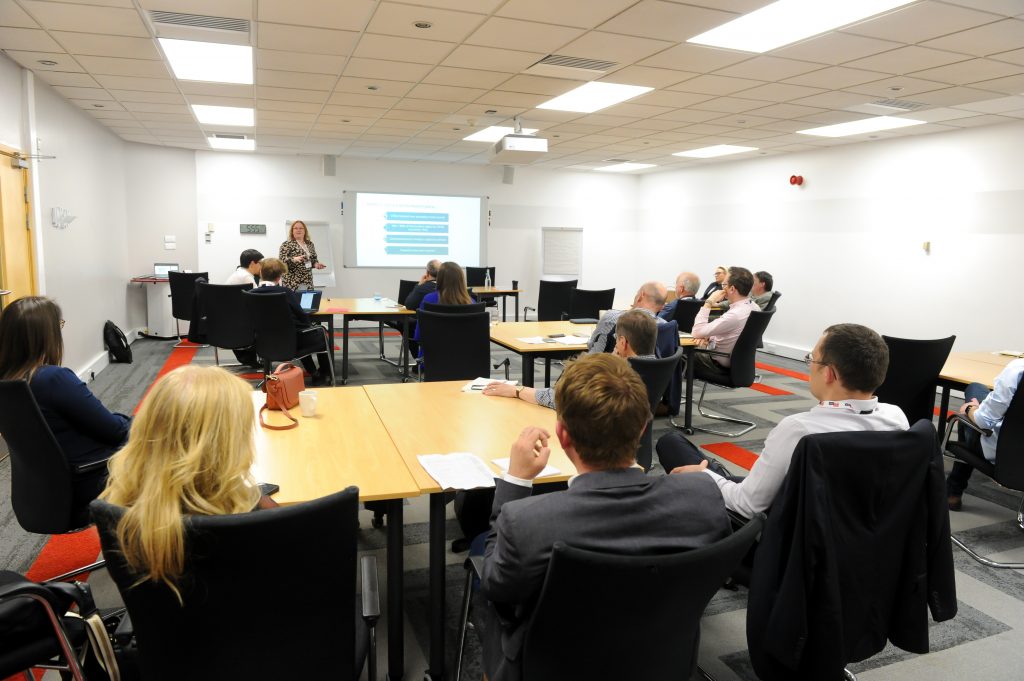
Alongside the plenary programme, twelve breakouts gave delegates space for smaller, more interactive discussions on specific aspects of the tax gap. Sessions were led by a wide range of voices, from senior HMRC and DWP officials to professional body leads, academics, independent advisers, and private-sector contributors. Topics were equally broad, from offshore evasion and the taxation of wealthy individuals to Making Tax Digital, the Taxes Management Act, and HMRC’s data science capabilities.

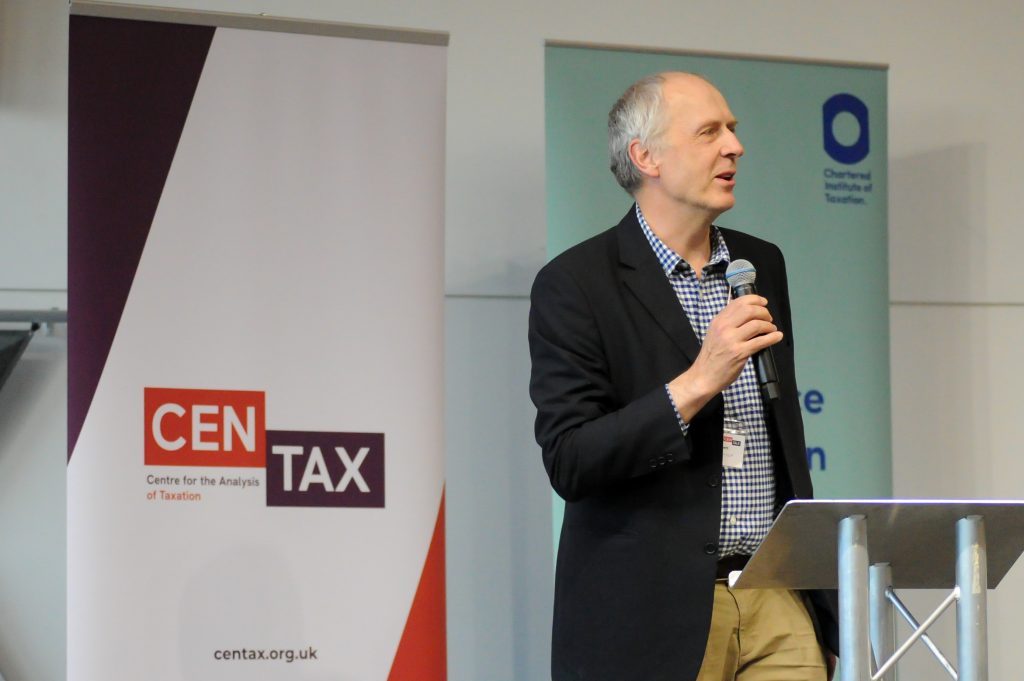
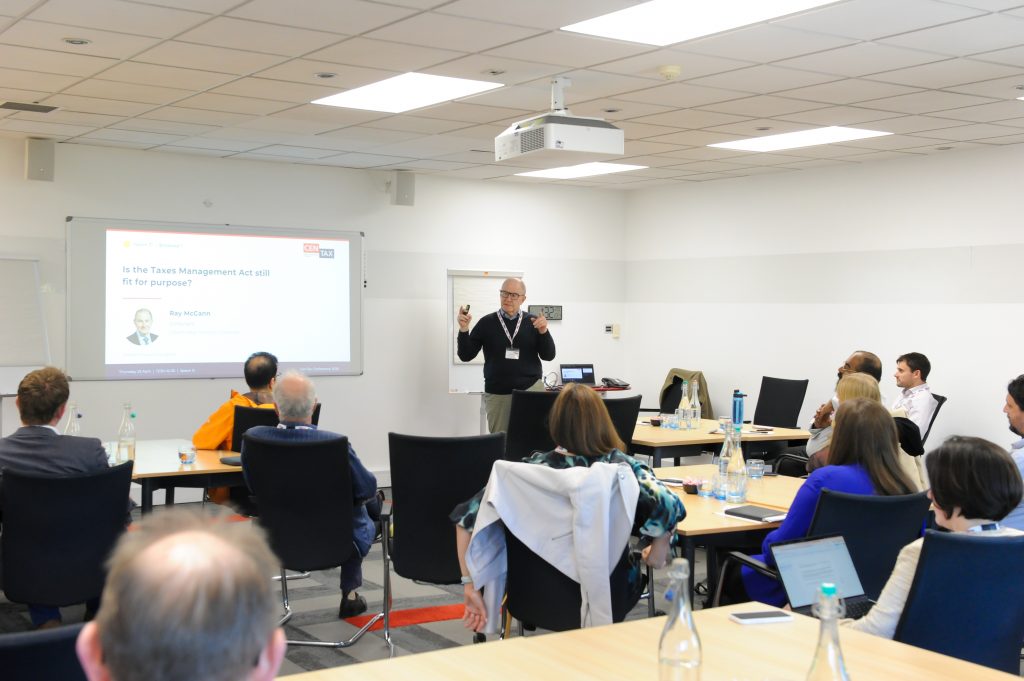
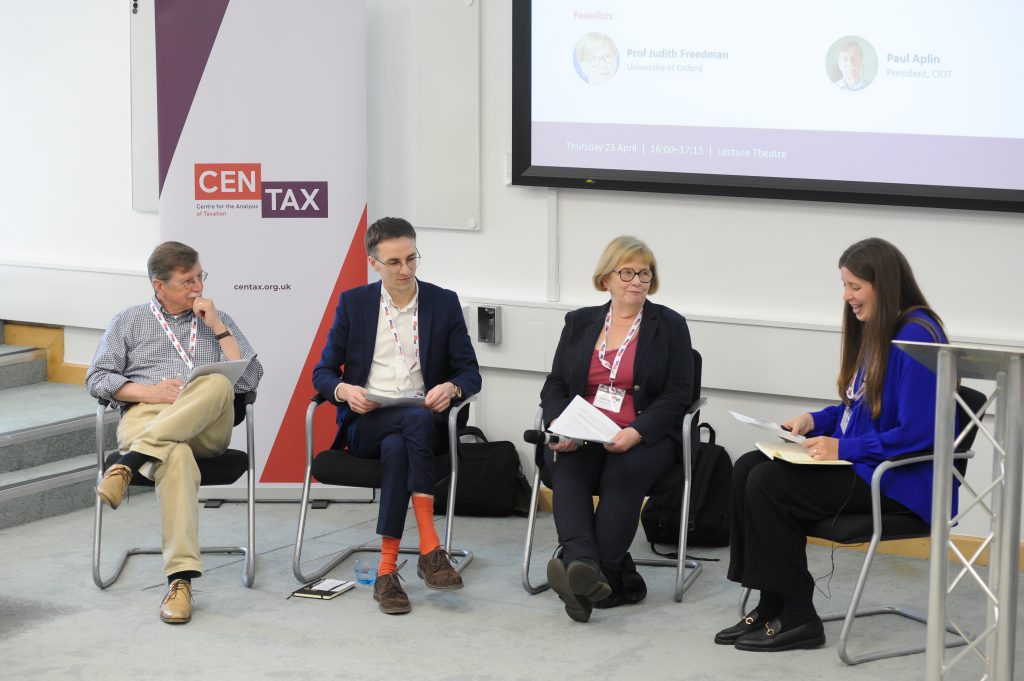
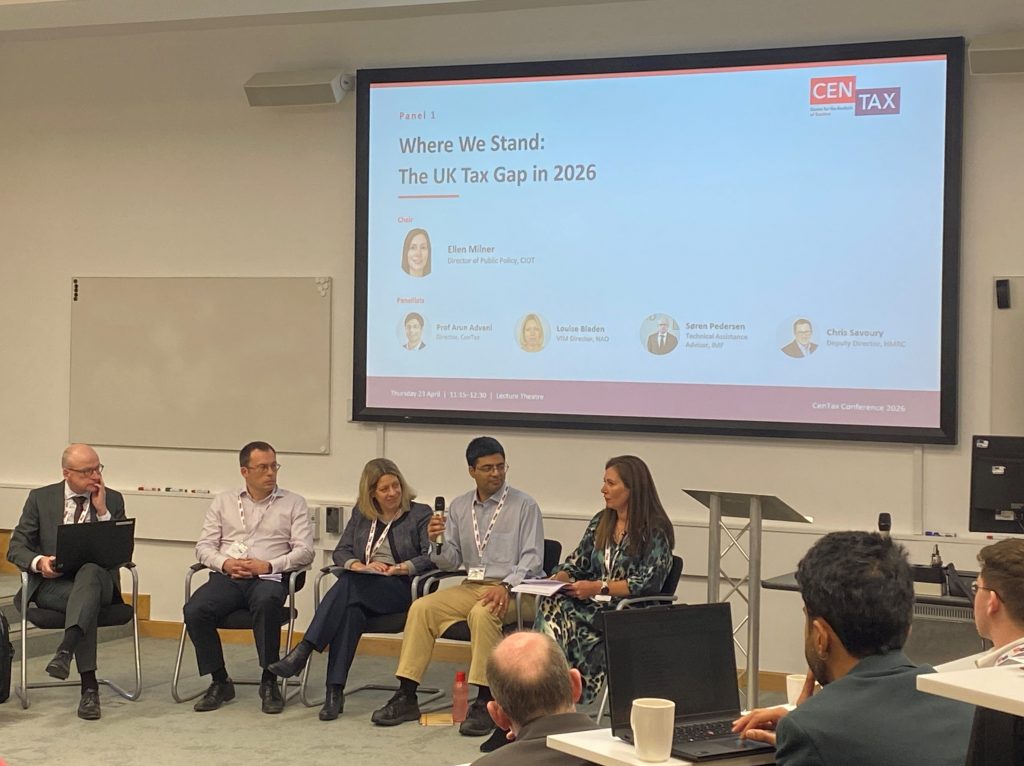

We plan to publish a fuller readout in the coming weeks, reflecting on four themes that ran through the discussion:
- The annual tax gap publication could be better targeted at generating actionable insights. HMRC’s headline estimate – £46.8bn or 5.3% of theoretical liabilities in 2023-24 – is more comprehensive and more transparent than most international comparators, but falls short in delivering deep insights into how the tax gap breaks down by specific taxes, behaviours and customer groups. Discussion noted that the analysis is limited by sample sizes, which need to grow if we are to understand the underlying causes behind persistent gaps and recent trends. There was discussion about whether the annual publication of a single headline figure is the best use of HMRC’s analytical resource, or whether deeper, more targeted work on the areas where measurement is weakest would be more valuable. The publication ought to play an important role in informing public debate and correcting misperceptions about tax loss from non-compliance. It should also help HMRC develop strategies for reducing the gap.
- The small business tax gap is many issues, not one. 60% of the tax gap is attributed to small businesses, and the small business corporation tax gap has risen sharply, from 9% of theoretical liabilities in 2011-12 to 40% in 2023-24. But the discussion returned repeatedly to how varied this group is: sole traders, nanobusinesses, microbusinesses, growing companies, the cash economy, and the organised crime element within the segment each have different drivers and need different responses. The behavioural breakdown matters too. Failure to take reasonable care is much larger in the published figures than deliberate evasion, but the line between the two is hard to draw, and combining them when looking at the small business gap has consequences for both compliance strategy and public trust. Simplification of the system itself came up alongside enforcement and digitalisation as part of the answer.
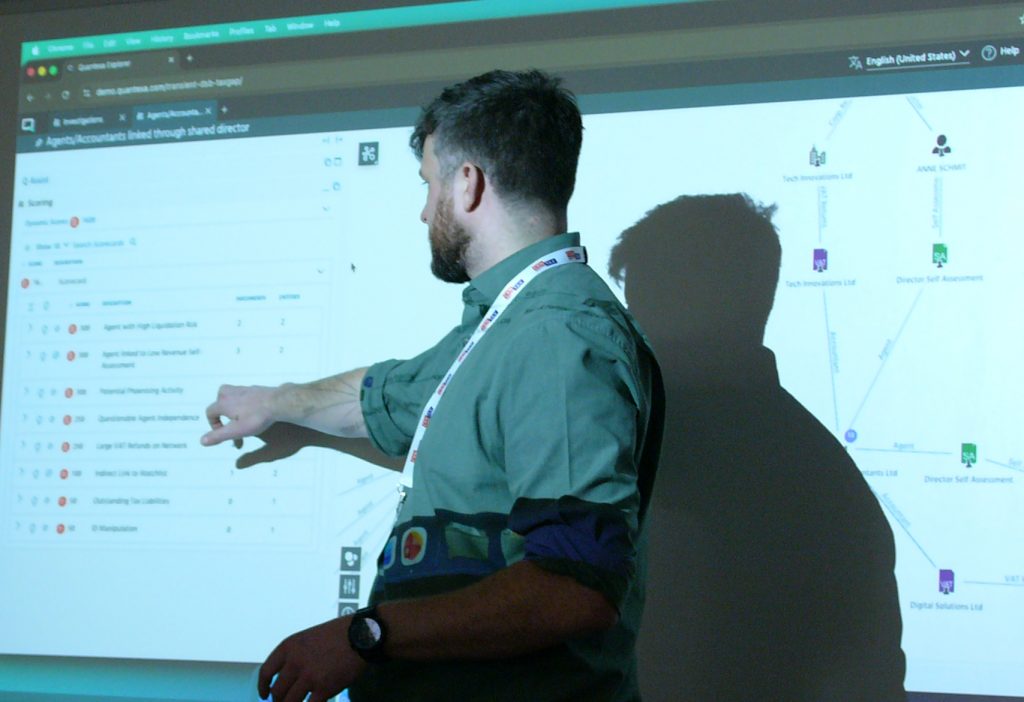
- The constraint on data and AI in tax compliance is data foundations, not AI capability. This was a consistent message across the sessions. The constraint on using HMRC’s data effectively in compliance sits in identification, linking, cleaning, legacy IT, lead times for acquiring new data, and the skills needed to use the outputs. The Universal Customer Record demonstration gave a useful example: the largest gains came from connecting records that already existed across separate operational systems. There was real appetite for HMRC drawing on more third-party data to supplement its compliance work. A recurring concern was the risk of using AI to smooth over complexity rather than address it, alongside the gap between a state constrained by governance in how it uses new technology and those seeking to attack the system, who face no equivalent constraints.
- Tax compliance is a coordination across government challenge, not just an HMRC problem. Responsibility for tax compliance extends well beyond HMRC. Digital business ID, controls on phoenixism, and Companies House reform all sit outside HMRC’s remit but bear directly on the tax gap, and definitional inconsistencies in how fraud is treated across government complicate cross-departmental comparisons. The wider ecosystem of intermediaries, software providers, tax agents and the professional bodies, came up repeatedly in discussion, including whether HMRC should take a more active role as Making Tax Digital rolls out.
Reflecting on the conference, Professor Arun Advani, Director of CenTax, said:
“Two days of discussion left me thinking about what the tax gap is actually for. The UK measures it more thoroughly than almost any comparable country, yet the conversations across the conference suggested the headline number is being used for multiple different purposes. There is a richer story underneath which is lost, and it is one we want to draw out in our future work.”
Professor Andy Summers, Director of CenTax, added:
“What I will take away is how often the conversation came back to data, and to the practical work of making it usable. The analytical tools are increasingly capable, but they sit on foundations that are still uneven. Until linking, cleaning and access to third-party sources catch up, the contribution AI can make to closing the tax gap will be narrower than the headlines suggest.”
Josh Flew, Policy Fellow at CenTax, said:
“”My thanks go to everyone who joined us at Warwick last week. Thanks to the speakers and breakout leads who shaped the substance of the two days, and to the delegates whose contributions from the floor were equally valuable. A particular thank you to our brilliant CenTax team, whose work behind the scenes made the whole thing run as smoothly as it did.”
